MGA Workshop Classroom: From Bionic Hands to Brainwave Headsets, Young Scientists Are Creating the Future
Inside Our NeuroMaker Program This semester, our 5th and 8th graders embarked on an incredible scientific journey through the NeuroMaker Neuroscience Curriculum. This program explores how the brain and nervous system work, and how they connect with modern technology and real-life applications. From how neurons … Continue readingMGA Workshop Classroom: From Bionic Hands to Brainwave Headsets, Young Scientists Are Creating the Future
Inside Our NeuroMaker Program
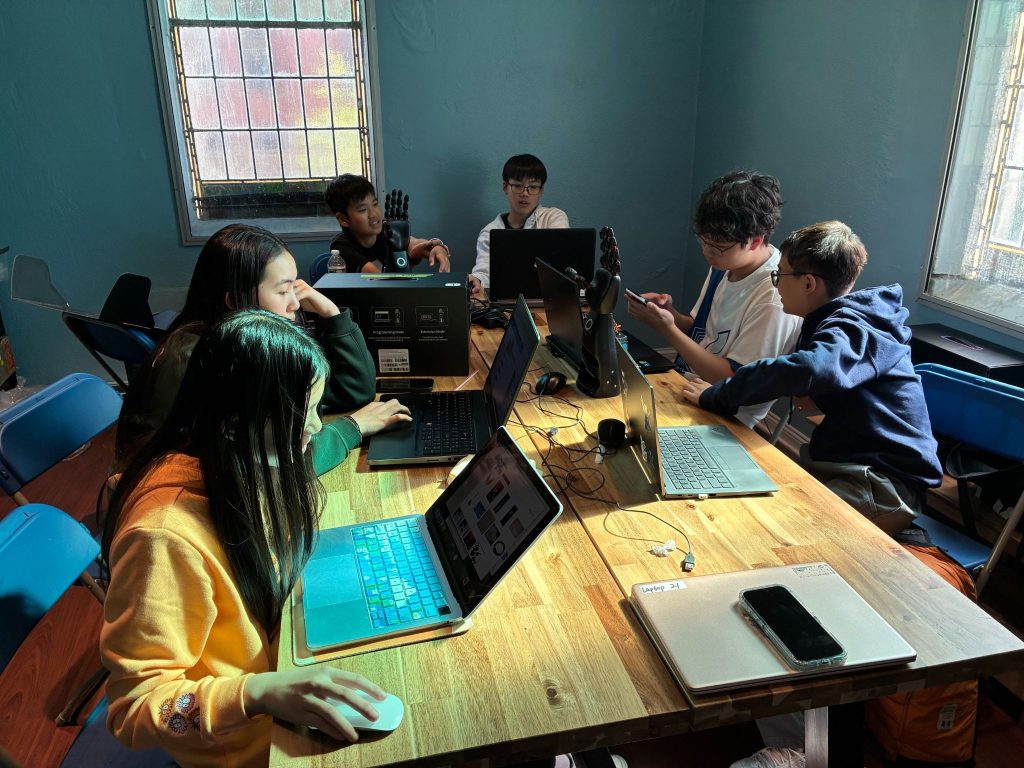
This semester, our 5th and 8th graders embarked on an incredible scientific journey through the NeuroMaker Neuroscience Curriculum. This program explores how the brain and nervous system work, and how they connect with modern technology and real-life applications. From how neurons send signals, to how the brain processes information, to how senses like hearing and vision function — our students have been peeling back the mysteries of the human body’s most fascinating organ, while also hands-on exploring how devices like sensors interact with the body.
What makes us most proud — after completing each project, students create their very own Student Portfolio on Google Sites, documenting their learning process, thinking, and discoveries. These portfolios aren’t just showcases of finished work; they’re records of growth!
Project 1: NeuroMaker Arm Assembly
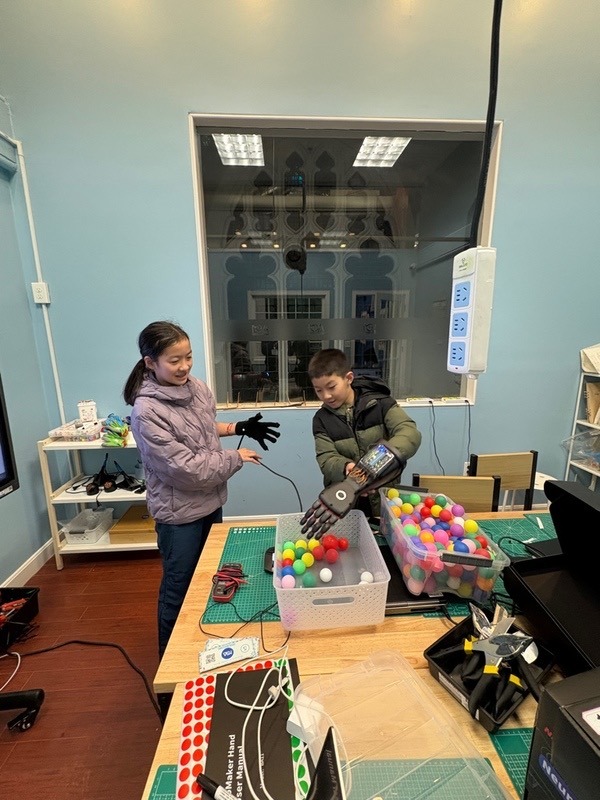
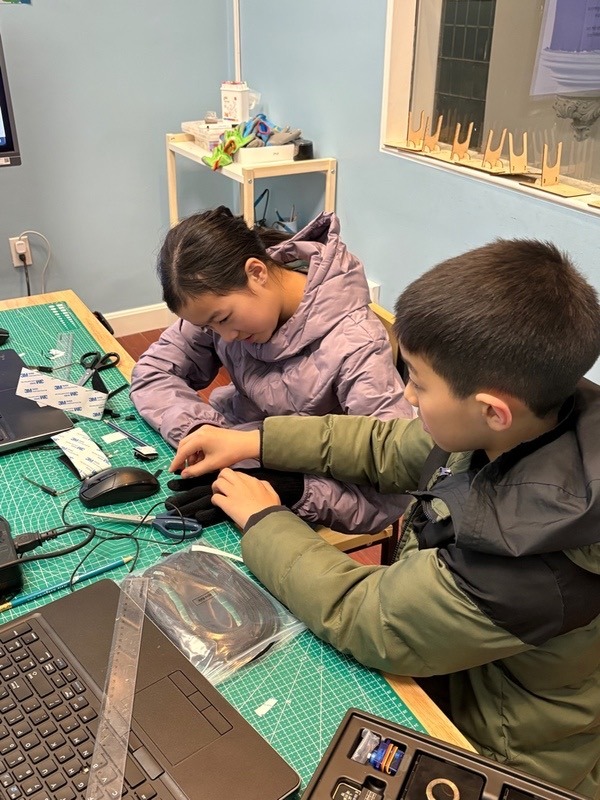
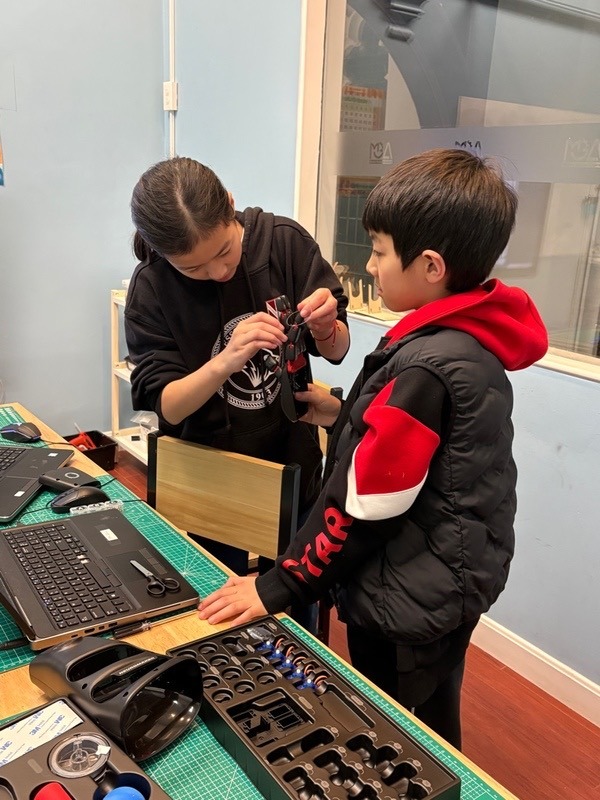
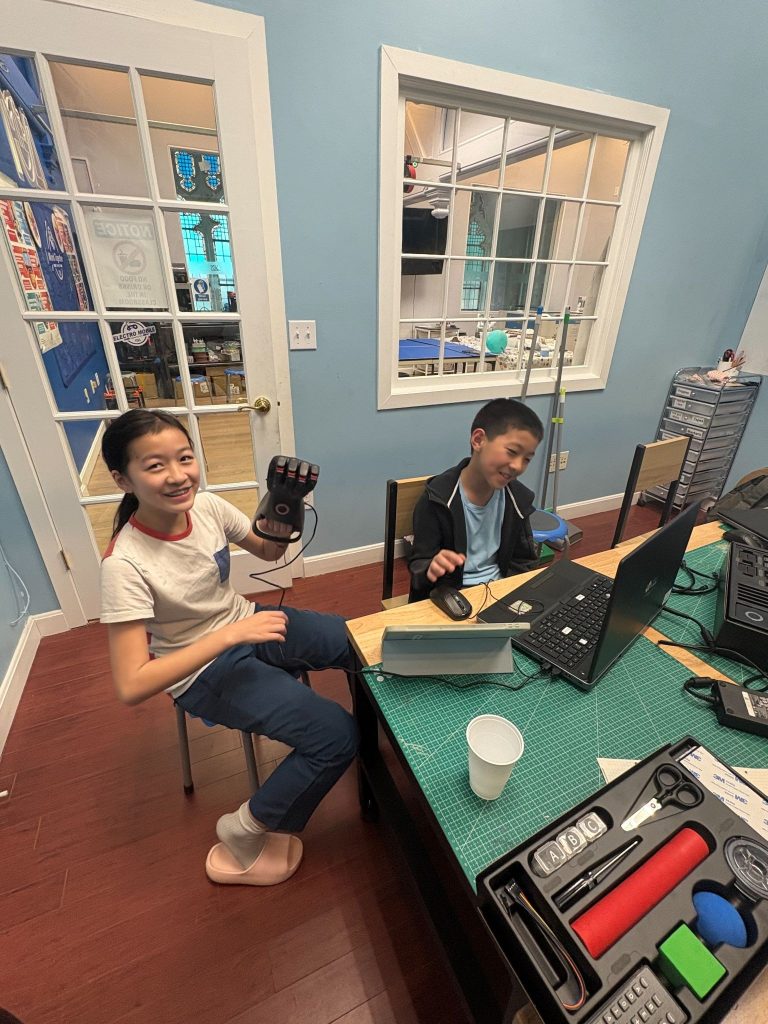
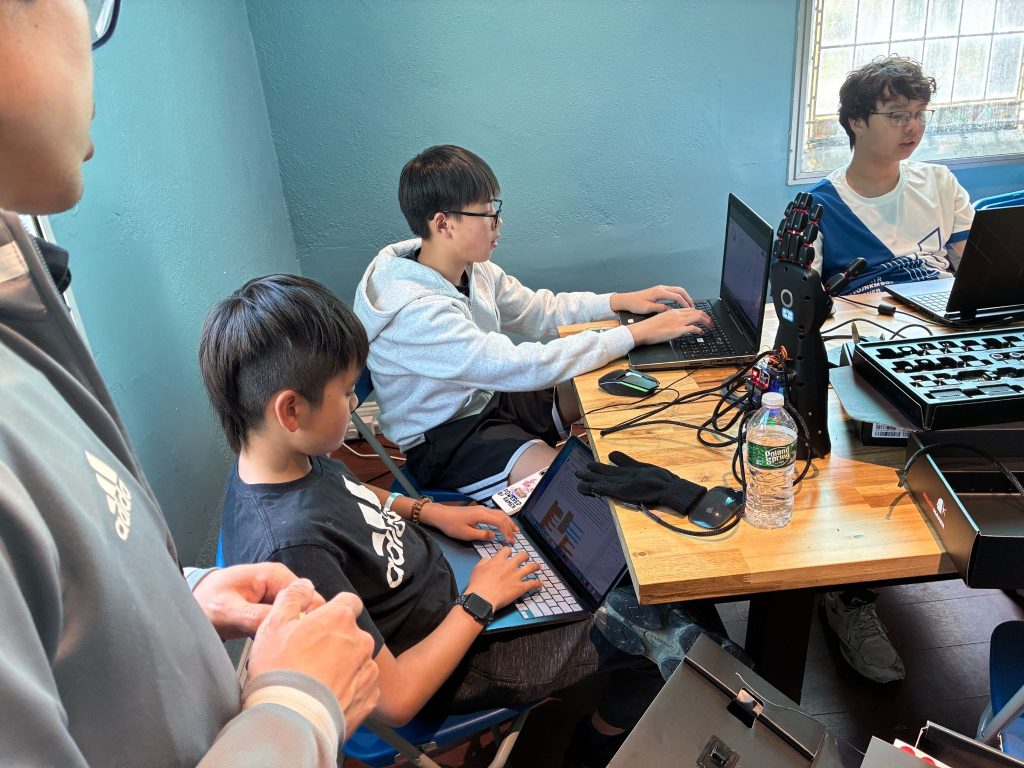
Our students built a bionic robotic arm from scratch! What’s truly remarkable is that Abigail didn’t just assemble the arm — she drew sophisticated analogies between mechanical structures and human anatomy, demonstrating the kind of interdisciplinary thinking we rarely see at this age. In her portfolio, she wrote:
“The bendable joints in the fingers of the mechanical arm are similar to the human are as it allows bend and movement. The servo motors act as muscles and rotate to create movement. The tendon wires are similar to human tendons because it acts as something to pull the finger after the servo motor moves the wire. This is like the human hand because tendons in the hand connect muscle to bone and cause movements in a joint when a muscle contracts or moves the tendon.”

To weave engineering and biology together so naturally — this is exactly how real scientists think!
🪨📄✂️ Project 2: Rock Paper Scissors Coding
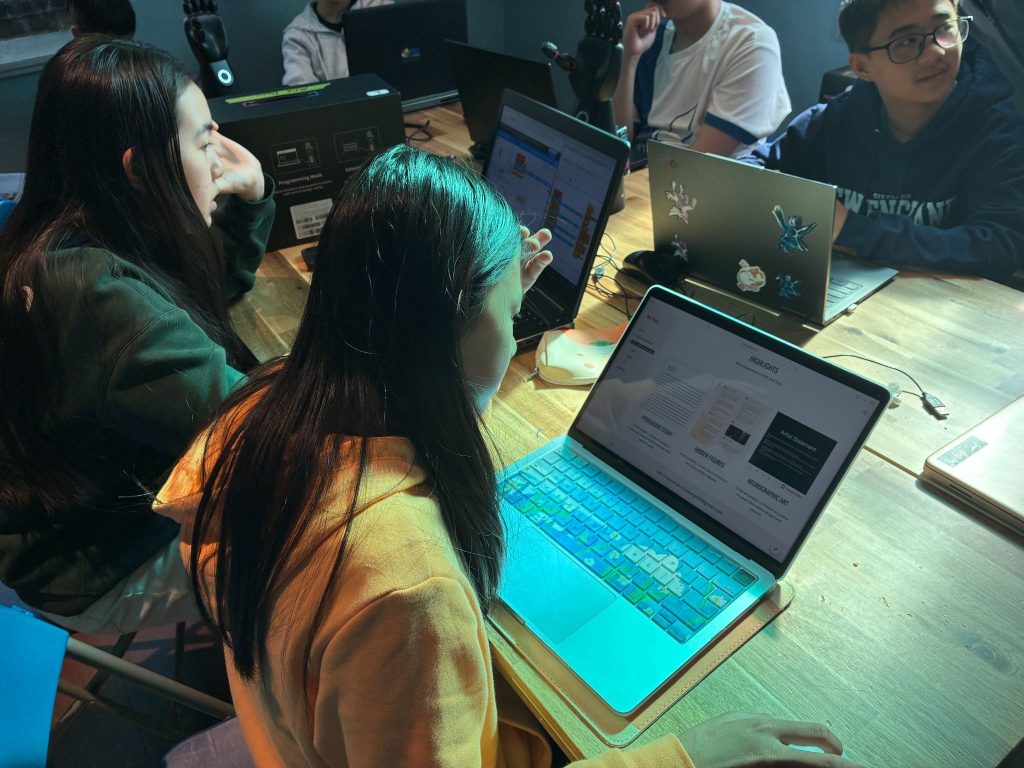
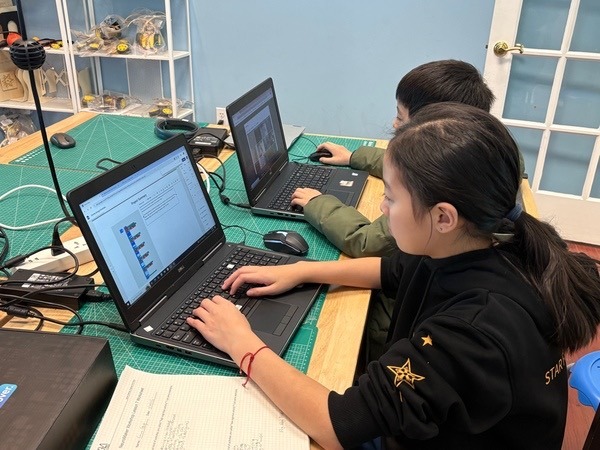
Emma used the mBlock coding platform to make a NeuroMaker robotic hand play rock-paper-scissors! She encountered an interesting challenge during programming — and the way she solved it shows that she’s already learning to think like an engineer:
“During the coding process, we realized that the original pose [for paper] is identical to paper, and that it was quite confusing to tell the difference between the two. So, we used the ‘Wave’ movement to represent ‘Paper.'”

Identifying a problem and finding a creative solution wasn’t all — Emma also systematically broke down the different code categories in mBlock in her portfolio: control codes (conditionals, loops, time delays), event codes, variables, motion blocks, sensing blocks — explaining each one with remarkable clarity. To articulate such complex programming concepts in her own words shows an understanding that far exceeds her age!
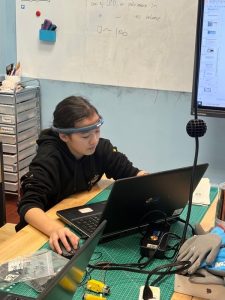
Project 3: Headband Attention Level
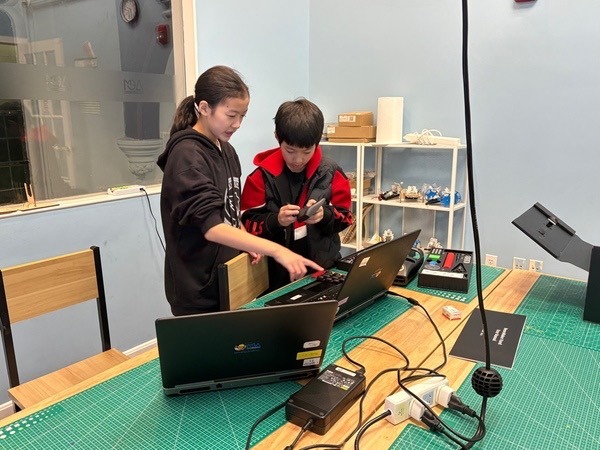
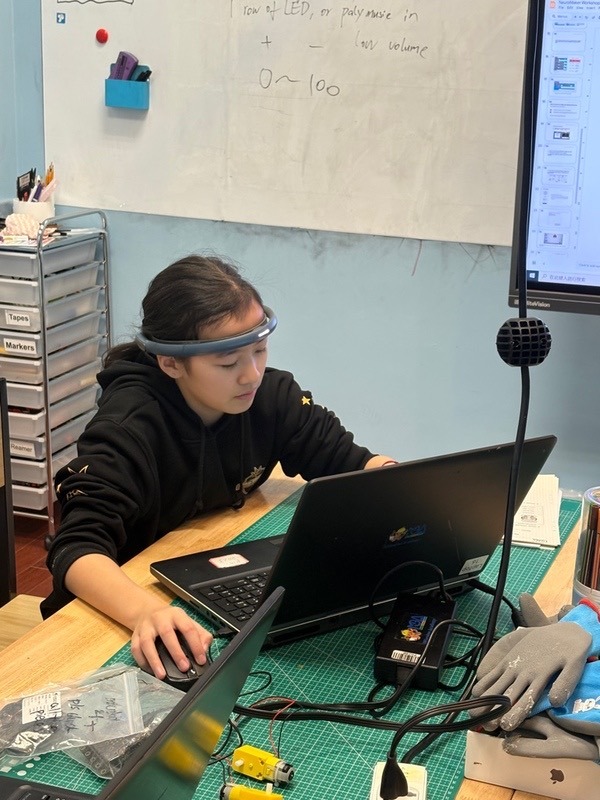
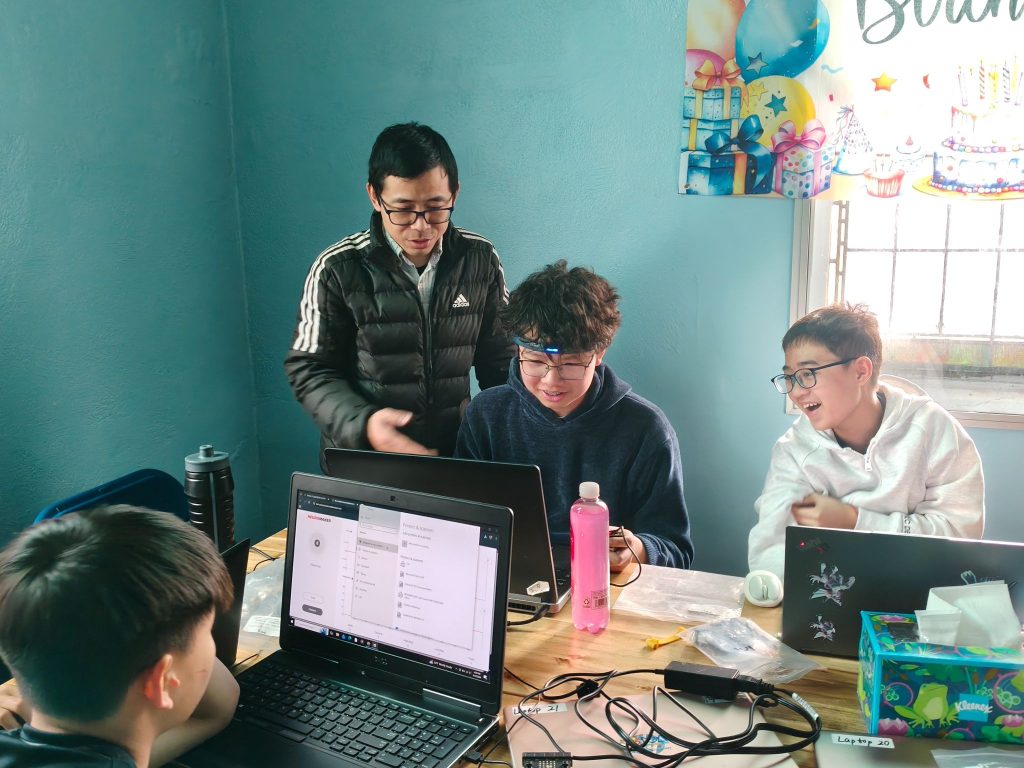
Vincent put on an EEG headband, programmed a micro:bit, and designed and conducted his own complete scientific experiment! For a 5th-6th grader to independently run a BCI (Brain-Computer Interface) experiment is truly remarkable. His experimental design was both rigorous and creative:
“To test the headband, I tried 2 activities and recorded my focus for both. The first activity was Wordle™. The focus was about 40-90. The second activity was ping-pong. That focus was 30-50. So, ping-pong uses less focus than Wordle™.”

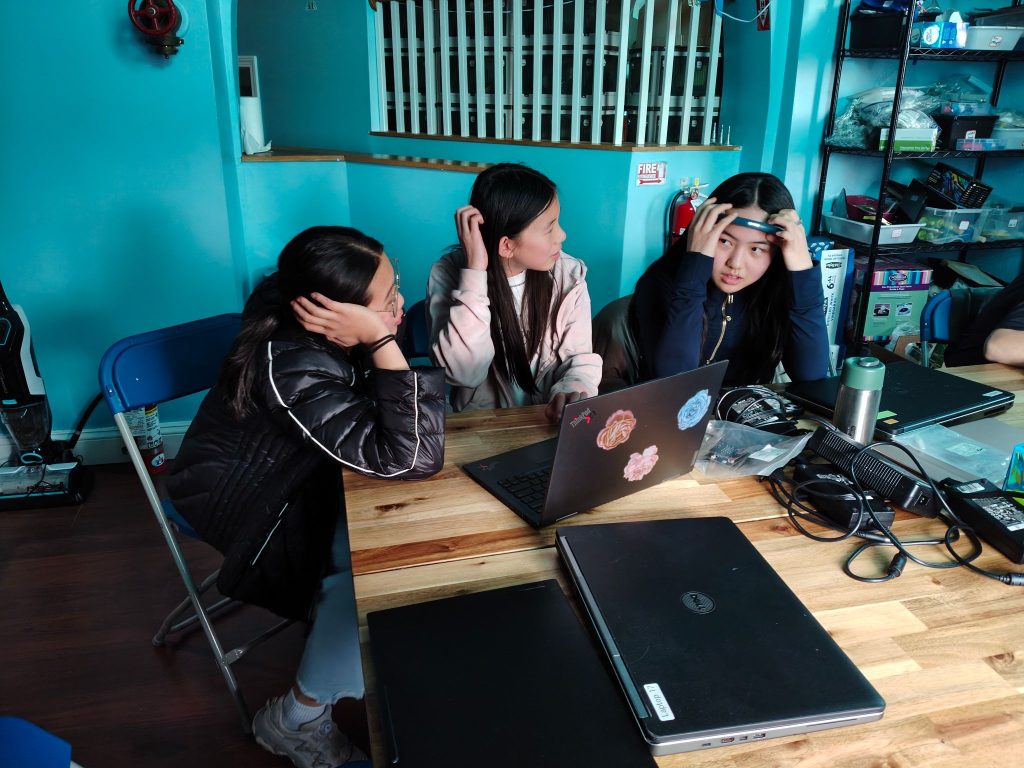
He also clearly explained how the headband works — by detecting small electrical signals on the scalp that come from the brain. Forming a hypothesis, collecting data, drawing conclusions — Vincent embodies the spirit of a true scientist!
Let’s Applaud Our Young Scientists!
From mechanical engineering to computer programming, from neuroscience to brain-computer interfaces — our students are engaging with some of the most cutting-edge fields in science and technology. They’re not just “studying” — they’re building. They’re not just “completing assignments” — they’re thinking like scientists and engineers.
These kids are demonstrating:
- ✨ Interdisciplinary thinking — connecting biology, engineering, and computer science
- 🔍 A spirit of scientific inquiry — asking questions, designing experiments, analyzing data
- 💪 Problem-solving skills — facing challenges with creativity and persistence
- 📝 Professional communication — documenting and sharing their work clearly
The scientists, engineers, and innovators of tomorrow may be sitting in our classrooms today! Let’s give a huge round of applause to these curious, creative young minds!