EP3 Classroom: From a Can of Soda to Understanding the World of Density
In MGA’s EP3 classroom, science is never just an abstract concept — it begins with curiosity and questions. Why do some soda cans sink while others float?Why does an egg sometimes sink in water, but float at other times?Can adding salt to water really make … Continue readingEP3 Classroom: From a Can of Soda to Understanding the World of Density
In MGA’s EP3 classroom, science is never just an abstract concept — it begins with curiosity and questions.
Why do some soda cans sink while others float?
Why does an egg sometimes sink in water, but float at other times?
Can adding salt to water really make objects float?
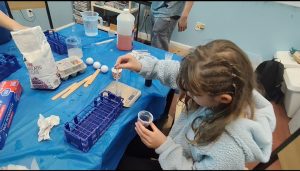
With these questions in mind, students began their exploration.
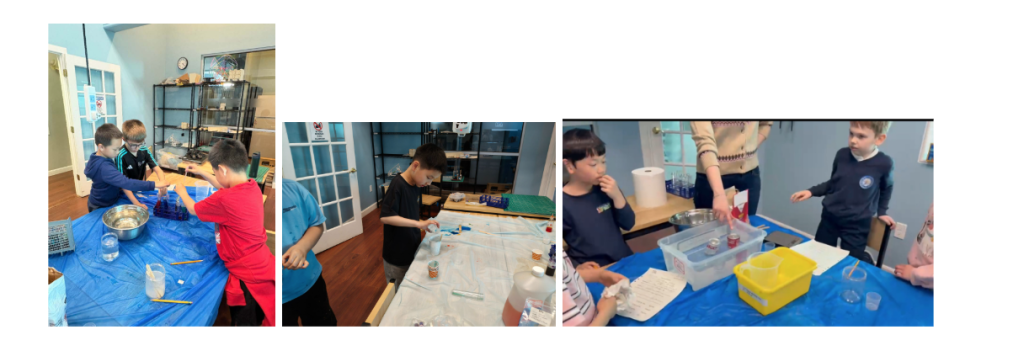
Through observation, comparison, and hands-on experiments, they gradually discovered that the key factor behind floating and sinking is density.
The class then moved from simply “observing phenomena” to actively experimenting.
Students mixed salt water and sugar water with different concentrations, carefully recorded changes, and analyzed the results.
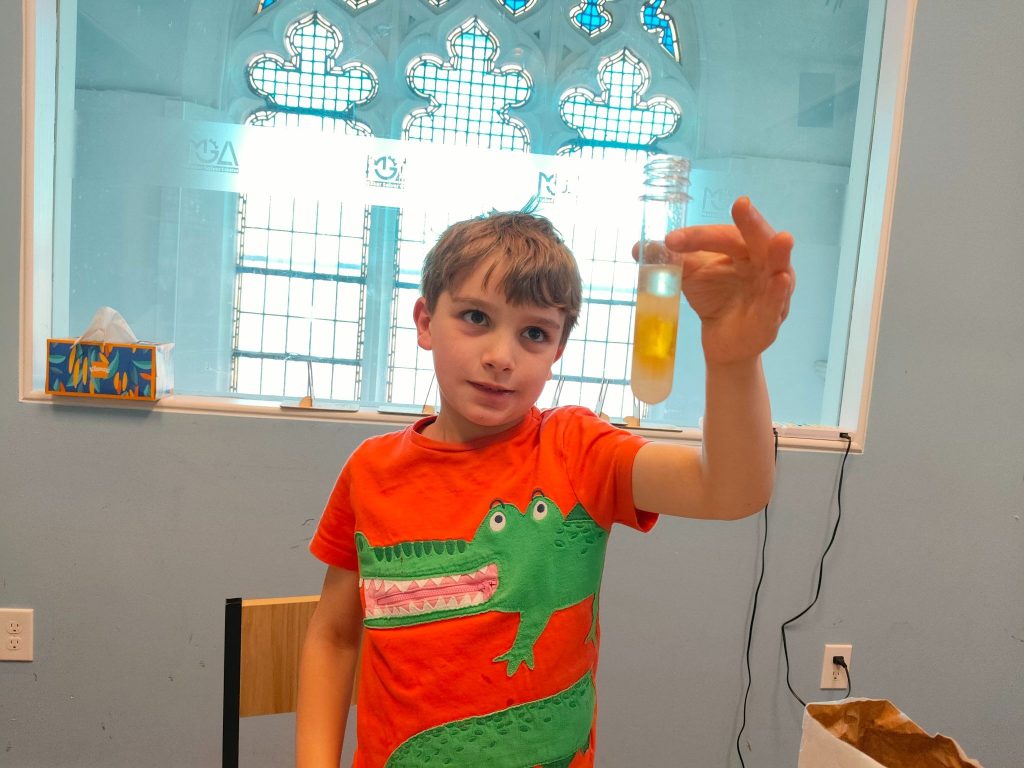
One of the most exciting activities was the Rainbow Lab.
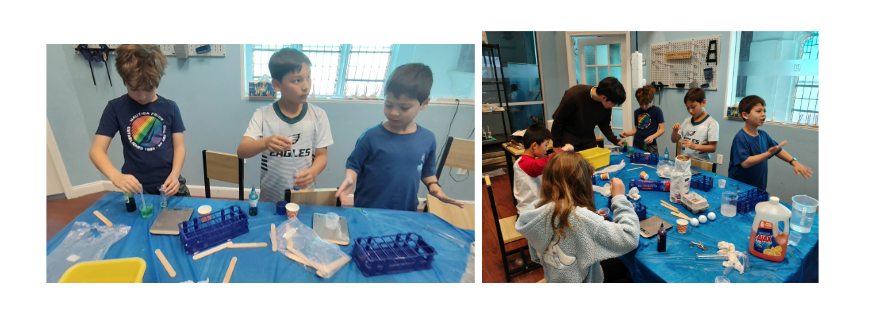
Students colored sugar water solutions of different densities and slowly poured them into test tubes.
Would the colors mix together, or would they separate into layers?
As the colorful liquids settled into beautiful rainbow-like layers, the answer became clear:
Liquids with different densities naturally form separate layers.
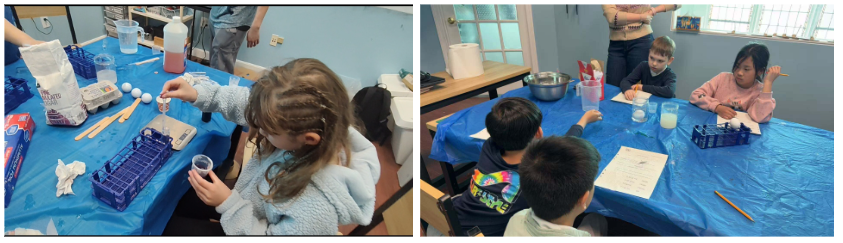
Throughout this process, students were not simply being “taught facts.”
Instead, they continuously asked questions, tested hypotheses, and refined their understanding.
And that is the core of an MGA classroom:
Helping students discover patterns and principles for themselves, rather than simply memorizing answers.